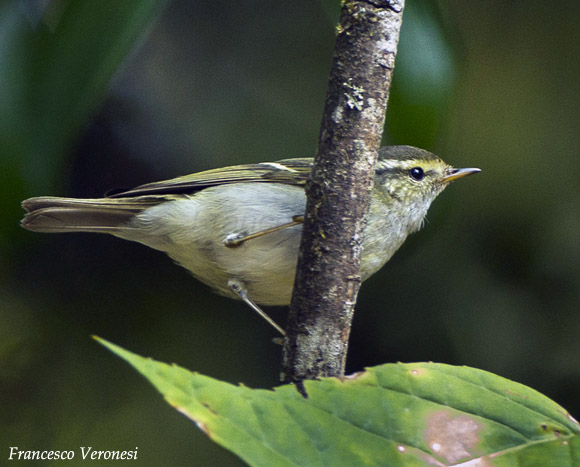
The Arctic Warbler is primarily a bird of Eurasia, where they are found in sub-arctic boreal forest and taiga. In North America, they have established breeding populations in Alaska. They are one of just a few birds that breed in North America, but overwinter in the Old World. Nearly all Arctic Warblers, including those that breed in Eurasia, move to southeastern Asia for the winter.
Habitat
In the North American part of their range, Arctic Warblers are mostly found in shrubby thickets and areas of dwarf willow or dwarf birch. Often found in thickets along riparian areas. They can also sometimes be found in spruce forests in central Alaska.
Diet
Feeds on insects and spiders. They have also been known to feed on small snails.
Behavior
Foraging is done by flitting and scrambling through thickets and other vegetation, gleaning insects as the move about. They often flick their wings while foraging, an activity that may help flush insects. In addition to gleaning insects while clambering about, they will also fly out to capture flying insects that have been disturbed by their activity.
Nesting
The nest of an Arctic Warbler is a dome of built of grasses, moss, rootlets, leaves, and other vegetative material, placed on the ground amongst protective vegetation. The female lays between 5 and 7 eggs and she alone incubates them. Incubation takes about 12 days, with both parents helping to feed the young after they hatch. The young fledge about 2 weeks after hatching.
Song
The song of an Arctic Warbler is a fast, monotonous trilling, preceded by one or two sharp "tchik" notes.
Migration
Migratory, with North American populations overwintering in southeast Asia.
Interactive eBird map
Click here to access an interactive eBird map of Arctic Warbler sightings
Similar Species
Can look similar in appearance to some of the more drab North American warblers, such as Tennessee Warbler or Orange-crowned Warbler.
Status
Arctic Warbler are found over a wide geographic area, are common in parts of their range, and overall populations appear to be stable. The IUCN lists the Arctic Warbler as a species of "Least Concern".
Further Information
- eBird - Arctic Warbler
- Audubon Field Guide - Arctic Warbler
- Cornell Lab of Ornithology - All About Birds: Arctic Warbler
Photo Information
Photo by Francesco Veronesi - Photo licensed under Creative Commons Attribution ShareAlike 2.0 Generic License
