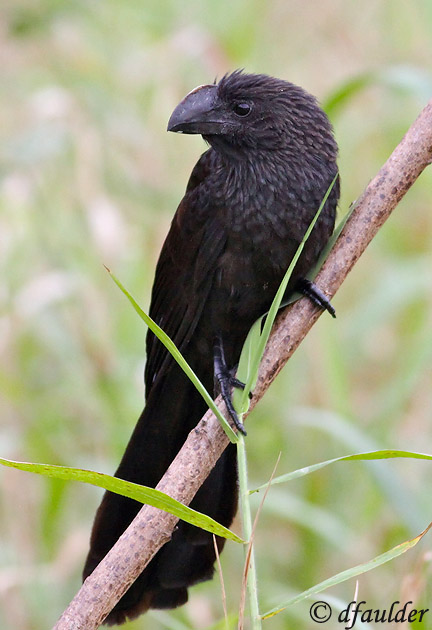
ID Keys: All black, massive bill, shaggy-looking plumage
The
Smooth-billed Ani is a relatively newcomer to the United States, with the
first birds appearing in Florida in the late 1800s. They evidently
naturally expanded from Caribbean populations, and populations increased in
Florida until about the 1970s. Since then, U.S. populations have been
in decline, and they are now a rare resident in much of Florida.
Populations are widespread in the American tropics, however, with strong
populations in the Caribbean, Central America, and South America.
Habitat
Found in brushy areas, dense underbrush
at woodland edges, and other brushy areas with nearby open areas.
Diet
Feeds mostly on large insects such as
beetles, caterpillars, moths, and grasshoppers, as well as other insects,
spiders, and occasionally small lizards, frogs, and snakes.
Behavior
Most foraging is done on the ground,
where they walk around, searching for insects.
Nesting
Nests communally, with multiple
"families" helping to build a large bulky nest of twigs and pieces of other
vegetation. Multiple females lay eggs in the nest, with multiple birds
helping to incubate the eggs and raise the young when they hatch.
Song
Makes a variety of cackles and
whistling calls, with the most common vocalization a whining whistle that
ascends in pitch.