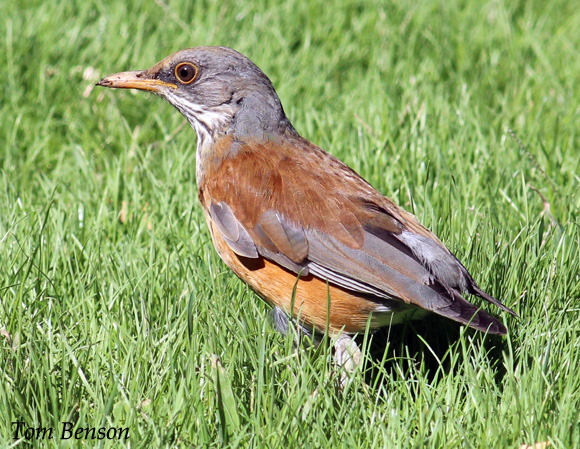
ID Keys: Gray head, rump and nape, rufous back, orange/rufous flanks
and breast, obvious eyering, streaked throat
The
Rufous-backed Robin is a medium-sized thrush species native to western
Mexico. They have been known to wander, however, and there are many
sightings of the species in the United States. Most sightings occur in
the fall, after the summer breeding season. Southeastern Arizona is
the location where they are seen the most, but they have also been seen a
number of times in southern Texas, California, and New Mexico. They
are also sometimes called "Rufous-backed Thrush" or "Grayson's Thrush", with
the latter sometimes treated as a sub-species (found in .Tres Marias islands
of Mexico).
Habitat
.Found in deciduous forests, from semi-arid to semi-humid. They also may be found in suburban areas and parks, managed plantations, riparian thickets and woodlands, and agricultural hedgerows and woodlots.
Diet
Omnivorous, feeding heavily on earthworms, insects, and other small invertebrates, as well as fruits and berries
Behavior
Foraging is often done on the ground, with short hops interspersed with pauses, particularly as they search for worms and other invertebrates. They will also feed among the foliage and branches of trees and shrubs. They are often gregarious outside of the breeding season, forming loose foraging flocks.
Nesting
The nest of a Rufous-backed Robin is a cup of grasses, moss, rootlets, and small twigs, bound together with mud. It is placed in tree or shrub, from 3 to 25 feet from the ground. The female lays between 2 and 4 eggs, and she alone incubates them. The eggs hatch after about 2 weeks, and both the male and female feed and raise the young. The young fledge after about 16 days.
Song
The song is a thin series of musical warbles, not dissimilar from an American Robin in style but generally weaker in presentation.
Migration
Considered non-migratory throughout their normal range. However, given the number of sightings in the U.S. and the timing of those sightings, it is obvious that significant post-breeding dispersal often occurs.
Feeders
They will occasionally attend feeders for offered fruits and berries.
Interactive eBird map
Click here to access an interactive eBird map of Rufous-backed Robin sightings
Similar Species
For vagrants found in the United States, they are most likely to be confused with American Robin . They could also be confused with Clay-colored Thrush, another tropical vagrant sometimes found in the same areas of the southwestern U.S.
Conservation Status
Populations are considered stable, they are found over a relatively wide geographic area, and they are common in parts of their range. T he IUCN lists the Rufous-backed Robin as a species of "Least Concern".
Photo Information
Photo by Tom Benson - October 9th, 2012 - Chiriaco Summit, California - Photo licensed under Creative Commons Attribution NonCommercial NoDerivs 2.0 Generic License