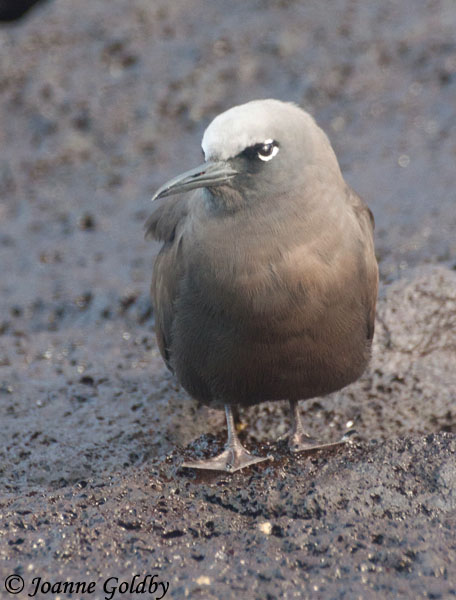
The Brown Noddy is a tern species of the tropics, with a distribution that stretches across both the Eastern and Western Hemispheres. In the North American part of their range, they are most known for a breeding colony at Dry Tortugas in Florida. They are the largest and most widespread of the three Noddy species.
Habitat
Worldwide, Brown Noddys are found over tropical oceans. They nest on tropical islands, but in most seasons, are often far out at sea. They are rarely found in sight of the mainland continents.
Diet
Feeds on small fish.
Behavior
Forages by dipping down from flight to capture fish at or just belowthe surface. They will also plunge-dive underwater for short distances in pursuit of fish.
Nesting
In the North American part of its range, the nest is typically built in a cactus or cedar tree, and consists of a stick platform with seawood or pebbles as lining. Nesting birds often return to the same nest year after year, with nests building in size each successive year. Both the male and female will help to incubate the eggs. Both parent feed and tend to the young after they hatch.
Song
Brown Noddys have a variety of calls, most of which are harsh grunts or wheezes.
Migration
The Brown Noddy has an extremely wide distribution globally, found in much of the tropics of both the Eastern and Western Hemisphere. Their movements within that range are poorly understood, including movements in and around the United States. Breeding populations in the tropics are often present in all seasons. For populations in the subtropics, birds disperse after the breeding season.
Interactive eBird Map
Click to access an interactive eBird map for Brown Noddy sightings
Similar Species
Similar shape to many tern species, but most likely to be confused with the Black Noddy . The Brown Noddy is larger with a heavier bill and a warm, chocolate-brown body that contrasts subtly with its pale grey-white forehead. In contrast, the Black Noddy is smaller and sleeker with a much darker, charcoal-black plumage, making its stark white cap appear much brighter and more defined
Conservation Status
Populations appear to be stable, and they are found over a wide geographic range. The IUCN lists the Brown Noddy as a species of "Least Concern".
Further Information
- eBird - Brown Noddy
- Audubon Field Guide - Brown Noddy
- Cornell Lab of Ornithology - All About Birds: Brown Noddy
Photo Information
Photo taken by Joanne Goldby - Licensed under Creative Commons Attribution-ShareAlike 2.0 Generic License.
