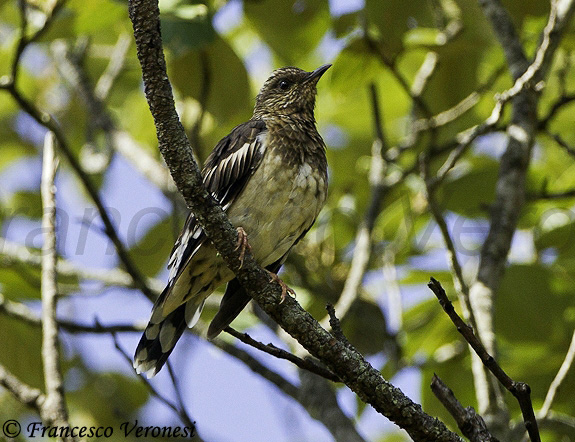
The Aztec Thrush is a bird of mountain forests of Mexico. They were unknown in the U.S. until an individual was spotted in Texas in 1977. A handful of records have occurred in Texas since, but more sightings have occurred in southern Arizona, where they have become a very rare, but almost regular visitor in the forested canyons of far southern Arizona in the late summer. 21 individual birds were sighted in southern Arizona in one fall, in 1996. The birds may wander in the late summer and fall in search of areas with large amounts of fruits and berries.
Habitat
Found in montane forests of Mexico. In the U.S., they are most often found in the forested slopes and canyons in extreme southern Arizona.
Diet
Feeds on fruits, berries, and insects, with diet often dependent upon season and location. When birds are found in the United States, they are often found in areas with a large supply of berries.
Behavior
Forages deliberately in the tree or undergrowth canopy in search of insects and fruits. Sometimes relatively sedentary when an area with large amounts of fruit or berries is found.
Nesting
The nest of an Aztec Thrush is a cup of grasses, moss, mud, and twigs, built in the crook or branch of a tree. The female lays 2, sometimes 3, eggs, and she alone incubates them. When the eggs hatch, both parents help to raise the young, who leave the nest after about 2 weeks.
Interactive eBird Map
Click to access an interactive eBird map of Aztec Thrush sightings
Song
The call of an Aztec is a whiny "wheeeer".
Migration
Considered a permanent resident throughout its native range in Mexico. However, after breeding and in winter, birds may wander in search of areas of heavy fruit crops on trees, which may be the factor leading the species to be occasionally sighted in the U.S.
Similar Species
Distinctive if seen well.
Status
Populations are not all that large, and may be in decline, but that do not yet approach levels that warrant significant concern. The IUCN lists the Aztec Thrush as a species of "Least Concern".
Further Information
Photo Information
Photo taken by Francesco Veronesi - April 29th, 2012 - Durango Highway, Mexico - Photo licensed under Creative Commons Attribution NonCommercial ShareAlike 2.0 Generic License.
