| Length: 38 to 42 inches | Wingspan: 64 inches | Seasonality: Extremely rare visitor |
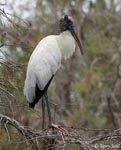
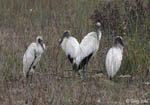
| ID Keys: White body, naked gray head, thick brownish-gray decurved bill. | ||
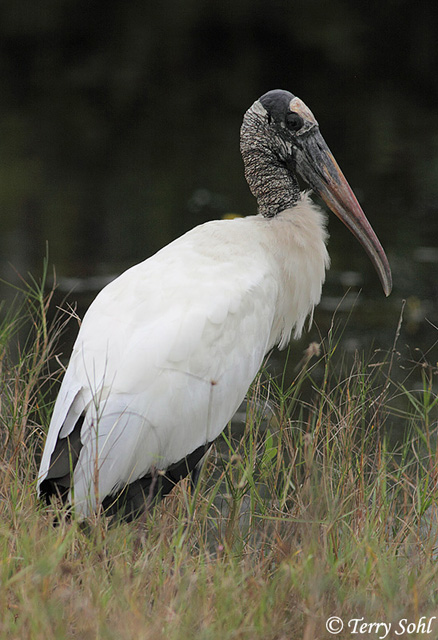 The Wood Stork is the only stork that breeds
in North America. It is found year-round in Florida and a few other
locations in the extreme southeast, although wandering individuals and small
groups may appear well north and west of its usual range. They are just
extremely rare visitors to South Dakota. Wood Storks are
currently at populations far below historical levels, primarily due to
disruption of normal water flows in south Florida and the resultant change in
its normal breeding habitat.
The Wood Stork is the only stork that breeds
in North America. It is found year-round in Florida and a few other
locations in the extreme southeast, although wandering individuals and small
groups may appear well north and west of its usual range. They are just
extremely rare visitors to South Dakota. Wood Storks are
currently at populations far below historical levels, primarily due to
disruption of normal water flows in south Florida and the resultant change in
its normal breeding habitat.
Habitat: Nests in cypress or mangrove stands, sometimes dead trees in reservoirs. Primarily forages in freshwater marshes, ponds, flooded fields, and flooded ditches.
Diet: Mostly fish. Also crustaceans, snakes, turtles, lizards, small mammals, insects, and some plant material.
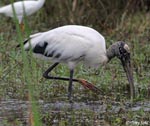
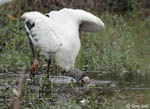
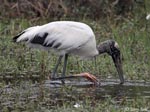
Behavior: Forages in shallow water with bill partially open in the water, ready to snap shut when contact is made with prey. Gregarious during the nesting season, breeding in colonies.
Nesting: Non-breeder in South Dakota. In their normal breeding range, Wood Storks are colonial nesters. The nest itself is a platform of sticks that is lined with leaves and other softer vegetative material. It is placed in a tree like a cypress or mangrove. The female usually lays 3 or 4 eggs, and both parents help to incubate them. When the eggs hatch, both parents help to feed the young.
Song: Generally silent.
Migration: Generally a permanent resident throughout it's range (southeastern coastline of United States), but post-breeding dispersal does occasionally bring individuals and small groups well to the north and west of its normal range.
Interactive eBird map: Click here to access an interactive eBird map of Wood Stork sightings
Similar Species: American White Pelican (in flight), Great Egret, White Ibis.
Conservation Status: Populations are sharply lower than historical levels. Alteration of water flows through southern Florida has had a severe impact on breeding habitat. Wood Storks have recently expanded their breeding range northward into the Carolinas, and there are other signs of recovery in recent years. On a global level, the IUCN doesn't consider threats to be sufficiently severe for the species to be listed as threatened, and the Wood Stork is thus listed as a species of "Least Concern".
Further Information: 1) USGS Patuxent Bird Identification InfoCenter, Wood Stork
2) US Fish and Wildlife Service Species Account - Wood Stork
3) Audubon Field Guide - Wood Stork
Photo Information: Photo taken on December 10th, 2012 - Big Cypress National Reserve, Florida - Terry Sohl
| Click on the map below for a higher-resolution view |
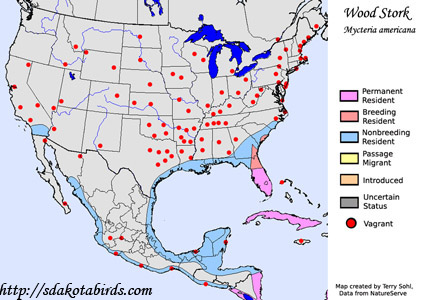 |
| South Dakota Status: Extremely rare visitor, with only a handful of records. |
Additional Wood Stork Photos
Click for a higher-resolution version of these photos
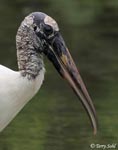
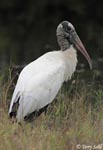
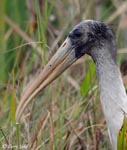
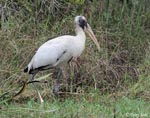

ALL PHOTOS COPYRIGHTED. Click below if you have interest in any of these photos for:
| Commercial Use |
| Fine Art Print |
| Personal Usage |
SOUTH DAKOTA BIRDS AND BIRDING - LOCATIONS OF WEBSITE VISITORS
Please mail all comments/suggestions/gripes/complaints to: Dakota Birder
Click here for other references used to compile this page