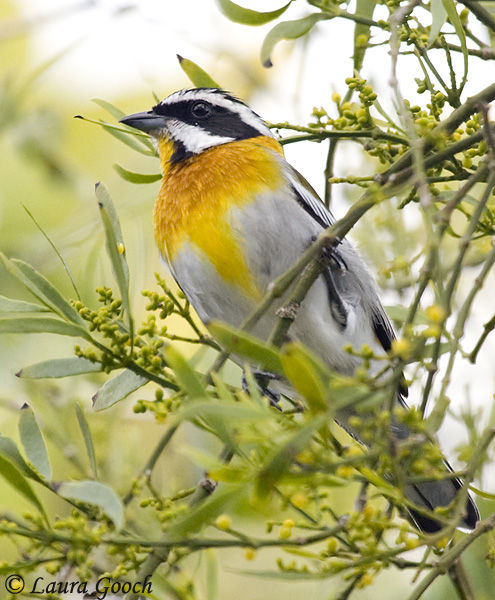
ID Keys: Bold black and white pattern on face and wings, orange
breast, neck, and rump, light flanks and undertail
The
Western Spindalis is widespread in the Caribbean, but in the U.S. is just a
rare visitor to southern Florida. There, most records have been in the
winter, mostly lone birds. However, there have been sightings of small
groups of birds in Florida in the spring, and in 2009, a nest with 3 young
was found in the Everglades National Park, the first confirmed breeding in
the United States. Taxonomy of the species has been debated, and there
is some question as to its status in the "Tanager" family Thraupidae.
Habitat
In the Caribbean, found in tropical
forests, dense forest undergrowth, and shrubby areas. Sightings in
Florida have typically been in shrubby woodlands or in suburban areas with
flowering and fruiting plants.
Diet
Feeds on both plant material and insects.
Diet includes many fruits and berries, nectar, flowers, seeds, and insects.
Behavior
Often found in small mixed species
flocks when seen outside of the breeding season, with small groups of birds
visiting areas with fruiting trees and shrubs.
Nesting
The nest is a small cup built of grasses,
weed stems, and other vegetative material. The female lays 2 to 4
eggs, The female alone incubates the eggs, but both the male and female help
to feed the young upon hatching.
Song
Series of high-pitched, tinny notes ending
with a buzzing series of notes.
Migration
Considered a permanent resident
throughout their range. Some movement obviously occurs however, as
most sightings in the U.S. have been during the winter months.
Will sometimes come to fruit feeders
for offered apple halves. The species can be attracted to yards
with many fruiting and flowering trees and shrubs.