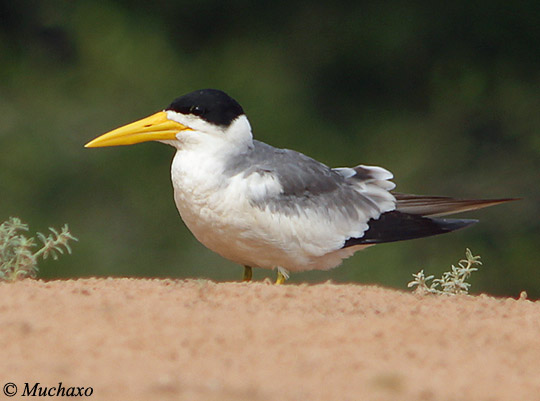
ID Keys: Heavy, large, yellow bill, black cap, white underparts,
dark grey back, obvious black primaries
The
Large-billed Tern is an easily identifiable tern species with a normal range
that covers much of South America. The only member of the Phaetusa
genus, they are easily identified by the heavy yellow bill, and the striking
plumage visible in flight with black primaries, white secondaries, and a
dark grey back. They are only rare visitors outside of South America,
but have been found in Cuba, Bermuda, and in a few scattered locations in
the United States.
Habitat
During the breeding season they are found
on sandy shorelines and sandbars of inland lakes and rivers, or near coastal
estuaries. While found on coastlines at all seasons, they are more common
there after breeding season concludes.
Diet
Feeds on a variety of aquatic creatures and
insects. Fish are a major prey item, but so are aquatic invertebrates.
They will also capture insects in flight.
Behavior
Foraging includes plunge diving for fish
and other aquatic prey, skimming the surface while in flight, or capturing
insects on the wing.
Nesting
Breeding often occurs in mixed colonies
with Black Skimmers and other tern
species. They nest near sandy shorelines of freshwater lakes and rivers,
with eggs laid directly in hidden locations with grasses or other
vegetation. Two eggs are laid, with both parents sharing incubation
duties that may last up to 30 days. Both parents help feed and protect
the young once they hatch.
Song
Very vocal birds, can often be heard making
various loud honking calls and quieter clucking calls.
Migration
While generally considered a
permanent resident throughout most of their range, they do obviously
disperse after nesting season is complete, with post-breeding birds
found in greater variety of aquatic habitats than breeding birds.
Numbers of Large-billed Terns along coastlines increase during the
non-breeding sesaon.