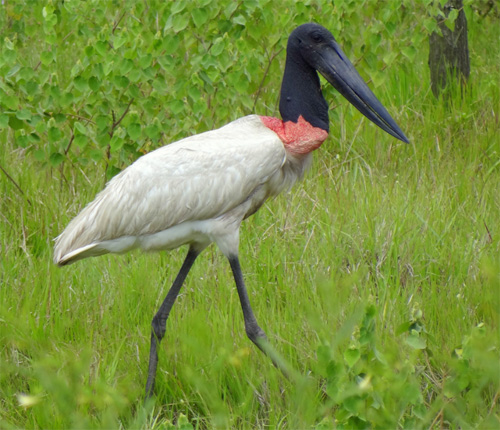
ID Keys: Very large size, very large broad bill, black head, reddish
neck, white body
Jabiru,
a species of stork, are among the largest birds in the Americas, with large
males standing as tall as 5 feet and weighing over 20 pounds. They are
birds of the tropical Americas, and are most common in South America, with
smaller populations in central America and southern Mexico. Stray
Jabiru have been found in the U.S. on a handful of occasions in south Texas,
but one bird was found as far north as Oklahoma. Jabiru is name that
has also been applied to a pair of other species that live in the Eastern
Hemisphere, but they are more properly titled the "Asian Black-necked Stork"
(called Jabiru in Australia), and the "Saddle-billed Stork" of Africa.
Habitat
The Jabiru inhabits freshwater wetlands, marshes, flooded savannas, river floodplains, and shallow lakes throughout tropical Central and South America. It is especially common in large seasonal wetlands such as Brazil's Pantanal, where abundant fish, amphibians, and other aquatic prey are available. During the dry season, Jabirus often concentrate around shrinking pools and rivers where food becomes more accessible.
Diet
Jabiru eat a variety of animals, including
large numbers of fish, crustaceans, mollusks, and amphibians. They
will also eat reptiles, small mammals, small birds, eggs, and carrion.
Opportunistic feeders, with groups of birds often showing up in areas with
feeding opportunities, such as drying pools with fish during dry spells.
Behavior
While never appearing in huge numbers,
Jabiru can be relatively social, with several birds or small flocks feeding
in the same location. Feeding behavior depends upon locality and the
type of prey that are available.
Nesting
Jabiru build very large nests, up to 4
feet wide and 6 feet deep. The nests are constructed of sticks and
branches, and are made by the male and female. They typically do
not nest in large colonies, but several nests may be in close proximity.
They are thought to mate for life, and are very protective parents, with
adults taking care of young for 6 months or more after hatching.
Song
Jabirus are generally quiet birds and lack the well-developed vocal abilities of many other storks because they have no functional syrinx (voice box). Instead, they communicate primarily by clattering their large bills, especially during courtship, territorial displays, and interactions at the nest. They may also produce low hisses, grunts, or wheezing sounds during close encounters.
Migration
Jabirus are generally non-migratory and remain within their tropical range throughout the year. However, they make seasonal local movements in response to changing water levels, following the availability of food as wetlands flood and dry. These movements can cover considerable distances but are driven by habitat conditions rather than true long-distance migration.
Generally unmistakeable. Structure similar to other stork species that
has reached the U.S., the Wood Stork.
Conservation Status
The Jabiru is classified as Least Concern by the IUCN because of its large range and stable overall population. Although it remains common in many parts of Central and South America, local populations can be affected by wetland drainage, habitat destruction, pollution, and disturbance at nesting sites. Protecting large wetland ecosystems is essential for maintaining healthy Jabiru populations.