Return to Main Page

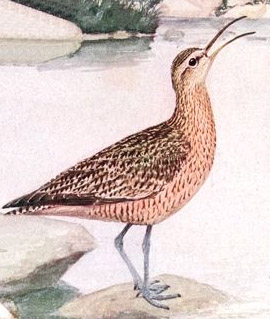
Eskimo Curlew

Numenius borealis

Length: 12 to 14 inches
Wingspan: 24 to 26 inches
Seasonality: Migrant
ID Keys: Slender decurved bill, dark brown crown with buff spots and edging, buffy supercilium
Eskimo Curlew - Numenius borealis

Once possibly among the most numerous of shorebirds to migrate through the Great Plains, the Eskimo Curlew is now feared extinct. Highly sought after in the 1800's as a game-bird because of their plump bodies, vast numbers were shot for food. While other shorebirds began to make a comeback after hunting stopped, Eskimo Curlews continued to decline. The last verified sighting was in Barbados in 1963. Very similar to the story of the Ivory-billed Woodpecker, however, unconfirmed reports have continued to trickle in since. An intriguing sighting came from a well-respected ornithologist in 2006 on the coast of Nova Scotia, but no photo or other proof was obtained.

Habitat

Nests on the Arctic tundra. In winter and migration, could be found on open areas such as agricultural fields and grasslands.

Diet

Insects, some fruits and berries.

Breeding

Non-breeder in South Dakota

Song

Soft high-pitched squeaks and whistles.

Migration

Breeds in northwestern Canada and Alaska. Winters in South America.

Interactive eBird Map

Click here to access an interactive eBird map of Eskimo Curlew sightings

Similar Species

Whimbrel

Conservation Status

Possibly extinct, with no verified sightings since 1963, but with several unconfirmed reports since then.

Photo Information

Painting by Louis Agassiz Fuertes

Further Information