| Length: 10 inches | Wingspan: 26 inches | Seasonality: Non-resident in South Dakota |
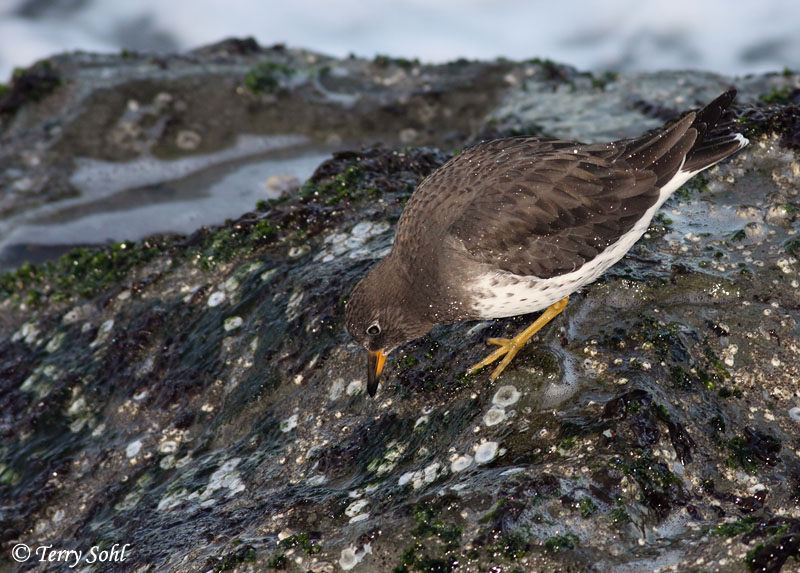
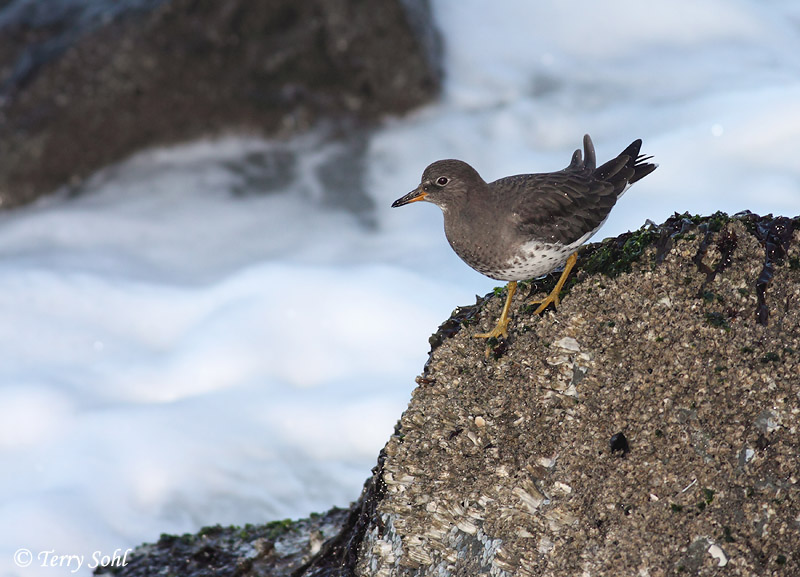
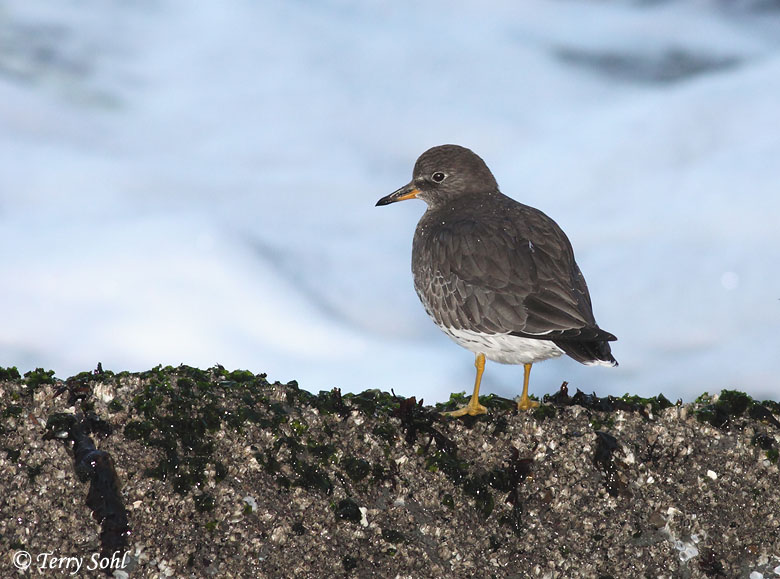
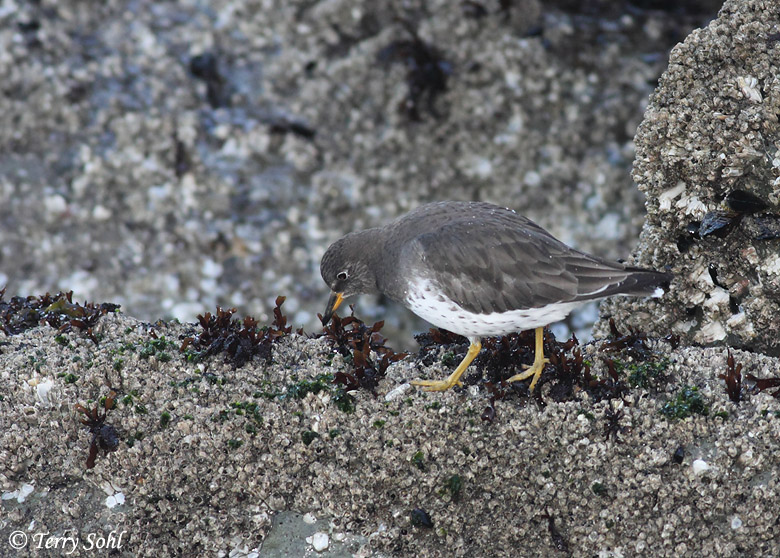
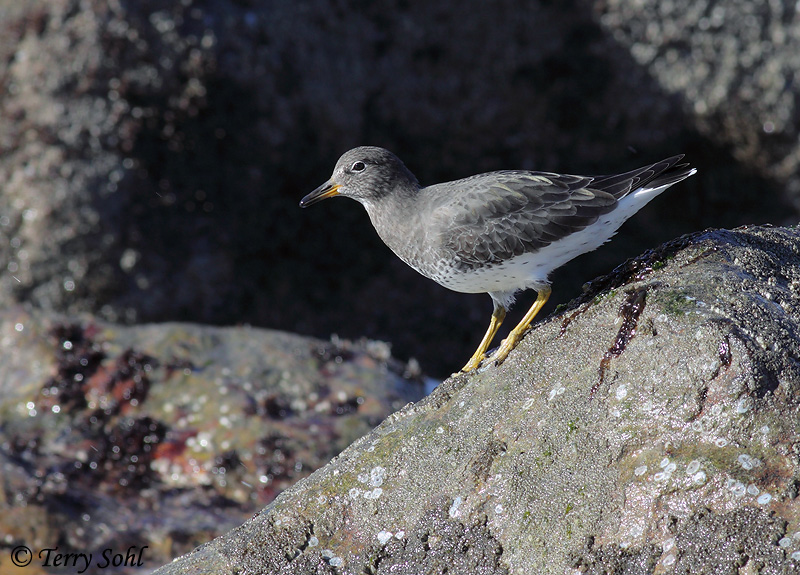
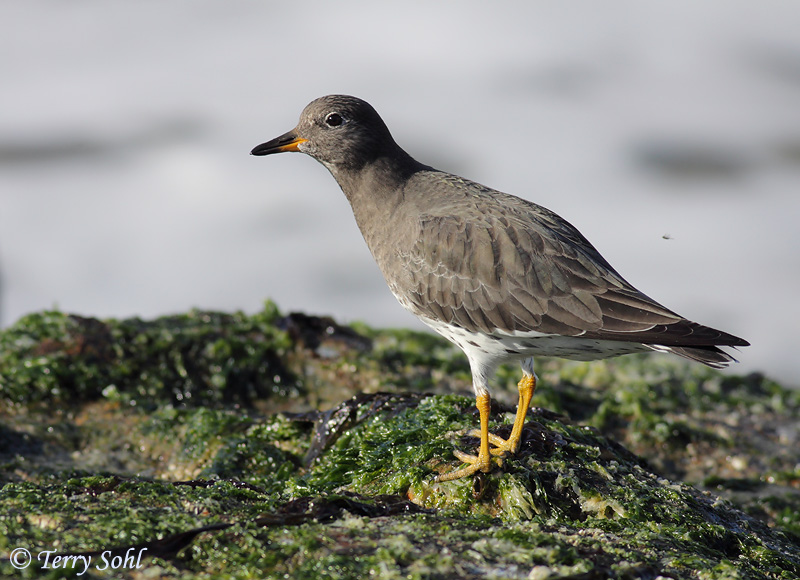
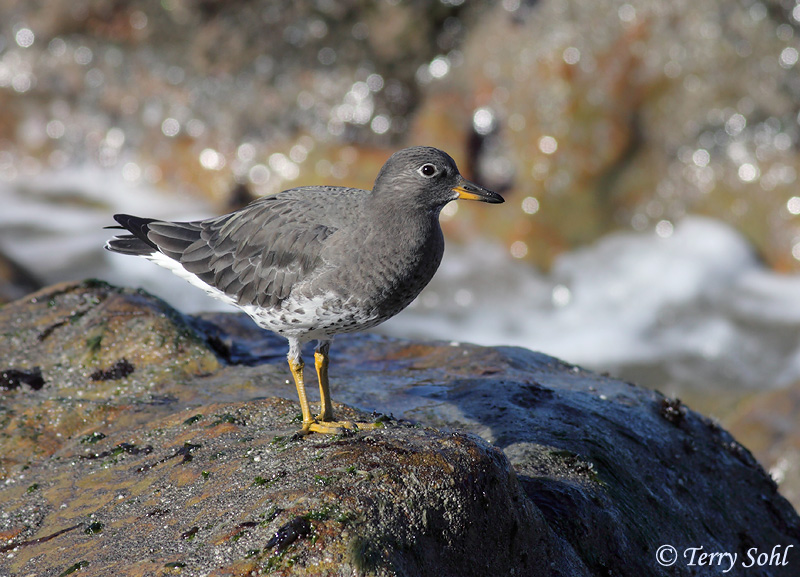
| ID Keys: Stocky body, short yellow legs, stout bill with orange base of lower mandible, grayish upperparts, chevron spots below | ||
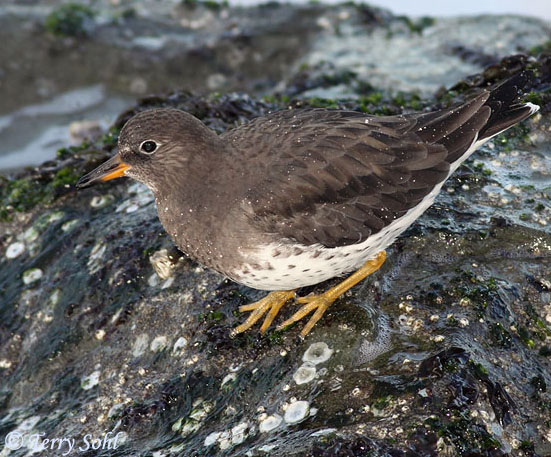 The
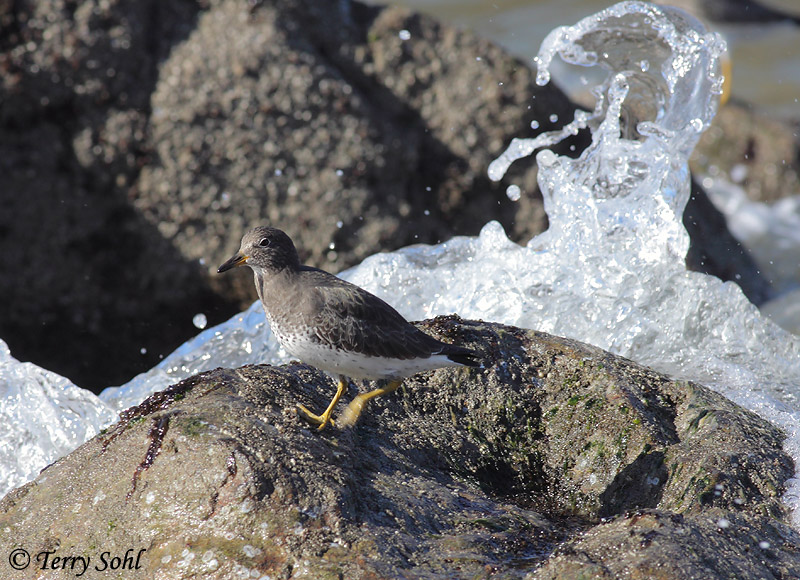
Surfbird is so named for its habits on its wintering grounds, where they
inhabit rocky shorelines, often foraging in and around the surf crashing on
the rocks. Their habitat is much different in summer, when they can be
found on higher-elevation tundra areas in Alaska. They are often
found in conjunction with Black Turnstones in their North American range.
The
Surfbird is so named for its habits on its wintering grounds, where they
inhabit rocky shorelines, often foraging in and around the surf crashing on
the rocks. Their habitat is much different in summer, when they can be
found on higher-elevation tundra areas in Alaska. They are often
found in conjunction with Black Turnstones in their North American range.
Habitat: In migration and in winter, they are found on rocky coastlines and rocky islands. In summer, they are found on rocky tundra areas above the treeline in Alaska.
Diet: The diet when found on the coasts in winter and in migration consists of mollusks, crustaceans, and other small invertebrates. On the summer breeding grounds, they feed heavily on insects and spiders.
Behavior: Surfbirds use their stout bills to pry mollusks and crustaceans from rocky shorelines.
Nesting: The species builds a nest on the ground, constructed of moss, lichens and dead leaves which are placed in a depression on rocky ground. Both the male and female will incubate the eggs and protect the young, but the young gather all of their food.
Song: Surfbirds are relatively quiet. Flocks foraging on the shoreline will give a frequent squeaking sounds. Flight and alarm calls consist of a series of buying notes.
Migration: Surfbirds are highly migratory. In summer, breeding birds are found in select regions of Alaska. The wintering range is much more spread out, with birds found along much of the west coast of North America.
Interactive eBird map: Click here to access an interactive eBird map of Surfbird sightings
Similar Species: Structure, stout bill make the species generally distinctive. In range, most likely species to be confused with the Surfbird is the Rock Sandpiper.
Conservation Status: There are currently no perceived major threats to Surfbird populations, and the IUCN considers the Surfbird as a species of "Least Concern".
Further Information: 1) WhatBird - Surfbird
2) BirdWeb.com - Surfbird
3) Audubon Guide - Surfbird
Photo Information: December 2008 - Coastal California near San Francisco - Terry Sohl
| Click below for a higher-resolution map |
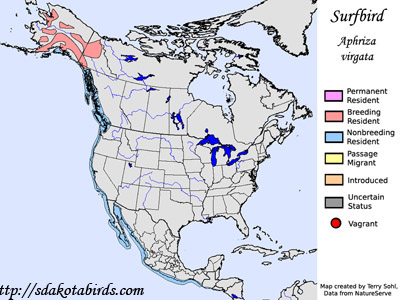 |
| South Dakota Status: Non-resident in South Dakota |
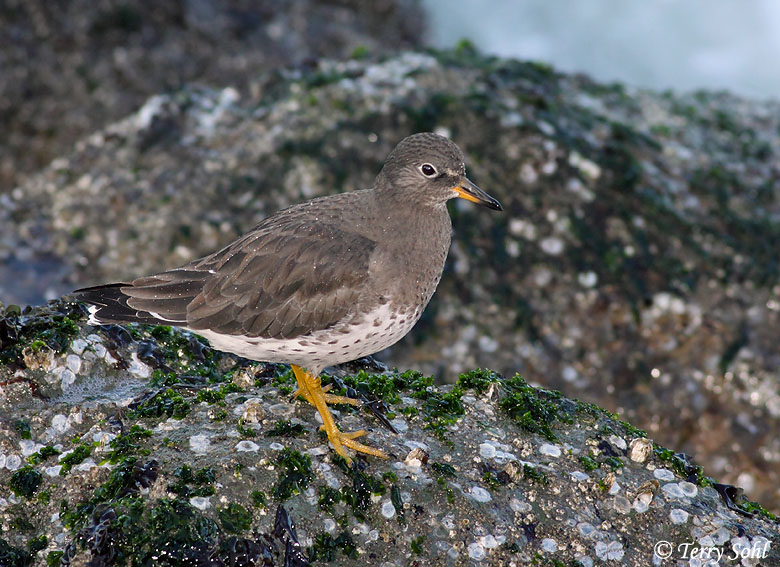
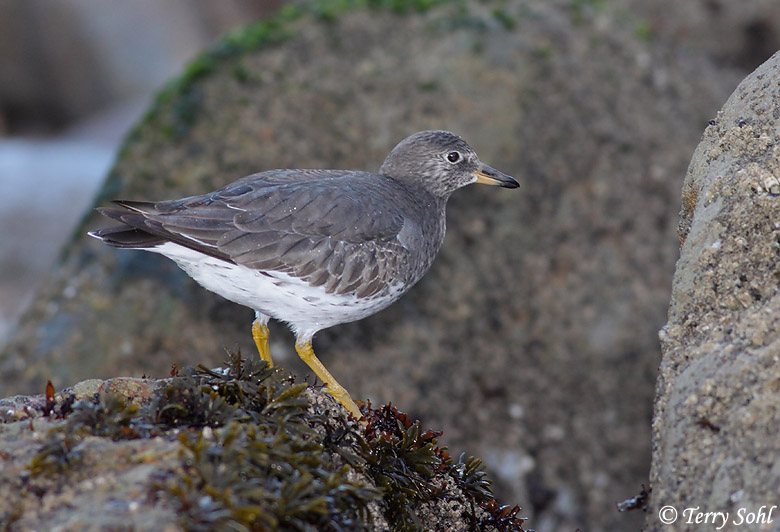
Additional Surfbird Photos
Click for a higher-resolution version of these photos
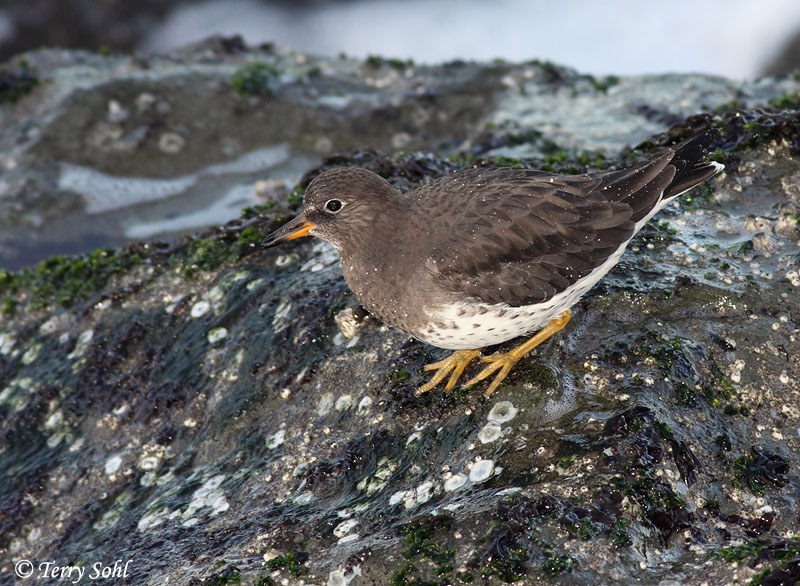
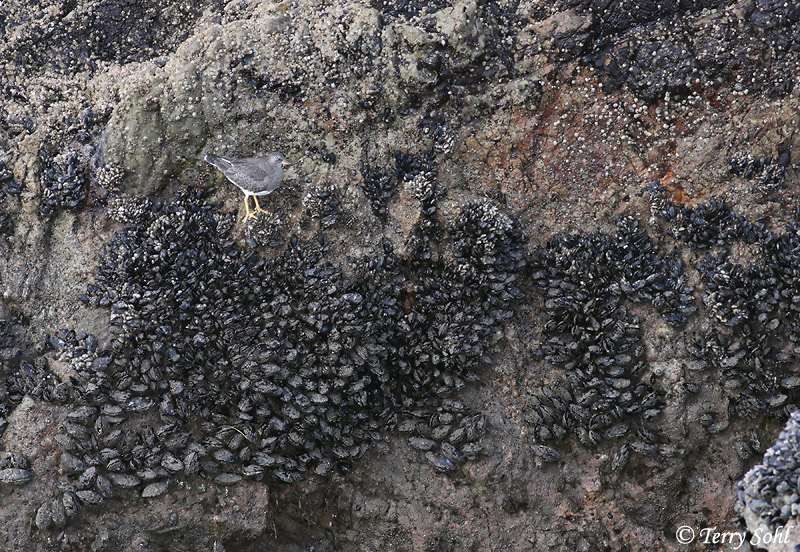
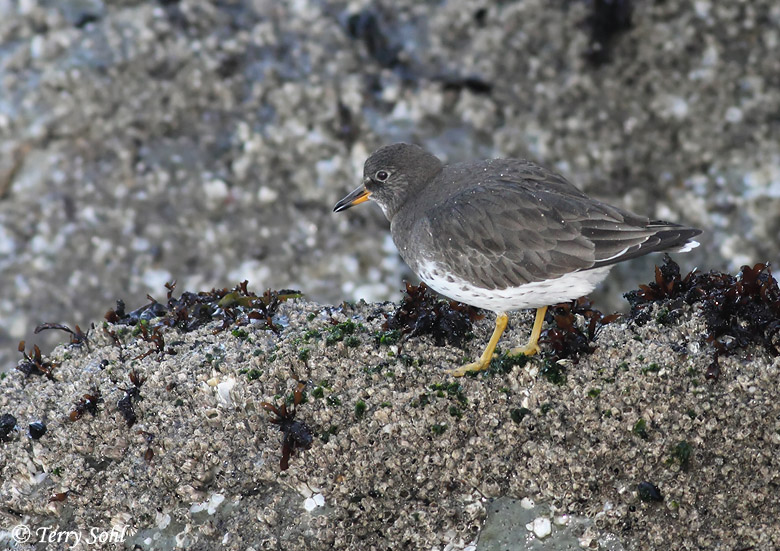
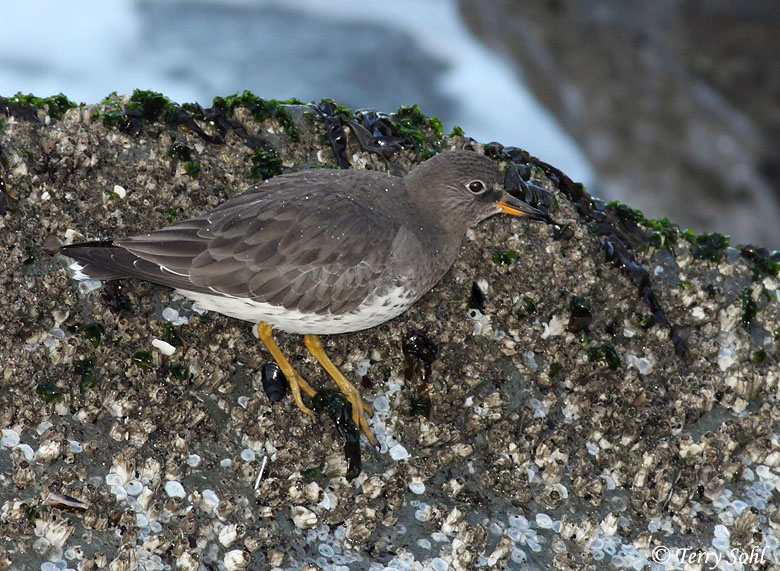

ALL PHOTOS COPYRIGHTED. Click below if you have interest in any of these photos for:
| Commercial Use |
| Fine Art Print |
| Personal Usage |
SOUTH DAKOTA BIRDS AND BIRDING - LOCATIONS OF WEBSITE VISITORS
Please mail all comments/suggestions/gripes/complaints to: Dakota Birder
Click here for other references used to compile this page