| Length: 5 to 6 inches | Wingspan: 12 inches | Seasonality: Non-resident in South Dakota |
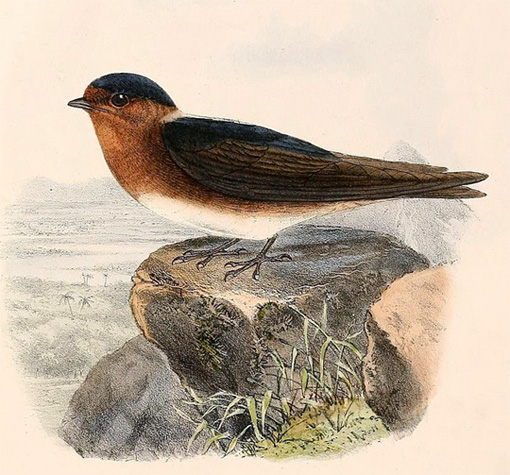
| ID Keys: Dark blue crown and upperparts, reddish-brown nape, forehead, and throat. Whitish underparts | ||
 The
Cave Swallow is found in much of Texas and in southern New Mexico in the
United States, and is also found in parts of Mexico, Cuba, and other
locations in the Caribbean. In the United States, they are perhaps
best known from the very large colony found in Carlsbad Caverns in New
Mexico, a habitat they share with Mexican Free-tailed Bats. As a
species they have likely benefited from a human presence. Highway
underpasses and other bridges and man-made structure provide more suitable
nesting locations than were naturally present before man came on the scene.
The
Cave Swallow is found in much of Texas and in southern New Mexico in the
United States, and is also found in parts of Mexico, Cuba, and other
locations in the Caribbean. In the United States, they are perhaps
best known from the very large colony found in Carlsbad Caverns in New
Mexico, a habitat they share with Mexican Free-tailed Bats. As a
species they have likely benefited from a human presence. Highway
underpasses and other bridges and man-made structure provide more suitable
nesting locations than were naturally present before man came on the scene.
Habitat: Found in a variety of open habitats as long as suitable nesting environments are available. Nesting environments traditionally were caves or other crevices and protected stony places, but now include many man-made structures as well.
Diet: Feeds on insects
Behavior: Forages for insects while in flight.
Nesting: The nest of a Cave Swallow is an enclosed structure of mud and clay, lined with softer vegetative material or feathers. Nests were traditionally located in protected caves and crevices. The clutch consists of 3 to 5 eggs. Both parents help to incubate the eggs and feed the young upon hatching.
Song: The song of a Cliff Swallow is a series of warbling, buzzy phrases.
Migration: While some birds are permanent residents, those in the northern part of their range are migratory
Interactive eBird map: Click here to access an interactive eBird map of Cave Swallow sightings
Similar Species: Distinctive from most swallow species, except for the similar Cliff Swallow, which has a light-colored forehead and a dark throat.
Conservation Status: Population trends indicate increasing numbers of Cave Swallows, and there are no major conservation concerns. The IUCN lists the Cave Swallow as a species of "Least Concern".
Further Information: 1) Cornell's All About Birds - Cave Swallow
2) Audubon.org - Cave Swallow
3) National Park Service - Carlsbad Caverns - Cave Swallow
Photo Information: Public domain image by Richard Bowdler Sharpe (1894)
| Click below for a higher-resolution map |
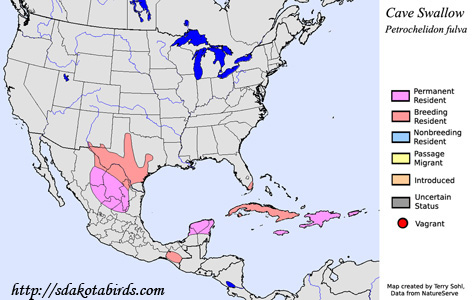 |
| South Dakota Status: Non-resident in South Dakota |
Additional Cave Swallow Photos (coming soon!!)

ALL PHOTOS COPYRIGHTED. Click below if you have interest in any of these photos for:
| Commercial Use |
| Fine Art Print |
| Personal Usage |
SOUTH DAKOTA BIRDS AND BIRDING - LOCATIONS OF WEBSITE VISITORS
Please mail all comments/suggestions/gripes/complaints to: Dakota Birder
Click here for other references used to compile this page