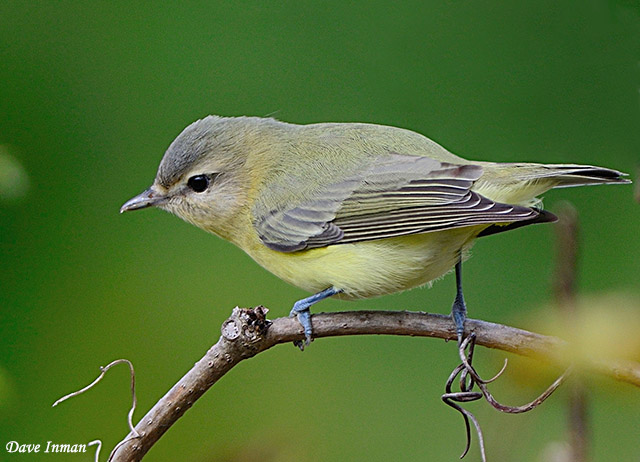
ID Keys: White on face with dark eye-line,
yellowish underparts (brightest
on upper-breast), greenish-gray upperparts.
The Philadelphia Vireo was first discovered in
Philadelphia in the 1940s, but is only a migrant through that area. The
vast majority summer in southern Canada and are only migrants through the
eastern half of the United States. They are most often found high in the
treetops and rarely sing during migration, so are perhaps widely overlooked in
spring in the U.S.
Habitat
Uses deciduous or mixed woodlands during the summer breeding season, especially near woodland edges or in young second-growth forest. Uses open woodlands in the tropics during the winter.
Diet
Primarily feeds on insects in all seasons. Will also eat spiders, snails, fruits, and berries.
Behavior
Philadelphia Vireos are often found high in the forest canopy, but they will also forage lower in the canopy or in shrubby undergrowth. They will sometimes flycatch, observing from a perch on a branch and flying out to catch passing insects.
Breeding
Non-breeder in South Dakota
Song
Short whistled phrases with deliberate pauses in between.
Migration
Primarily summers in southern Canada, locally in New England and the upper Great Lakes area. Winters in the tropics.
Interactive eBird Map
Click here to access an interactive eBird map of Philadelphia Vireo sightings